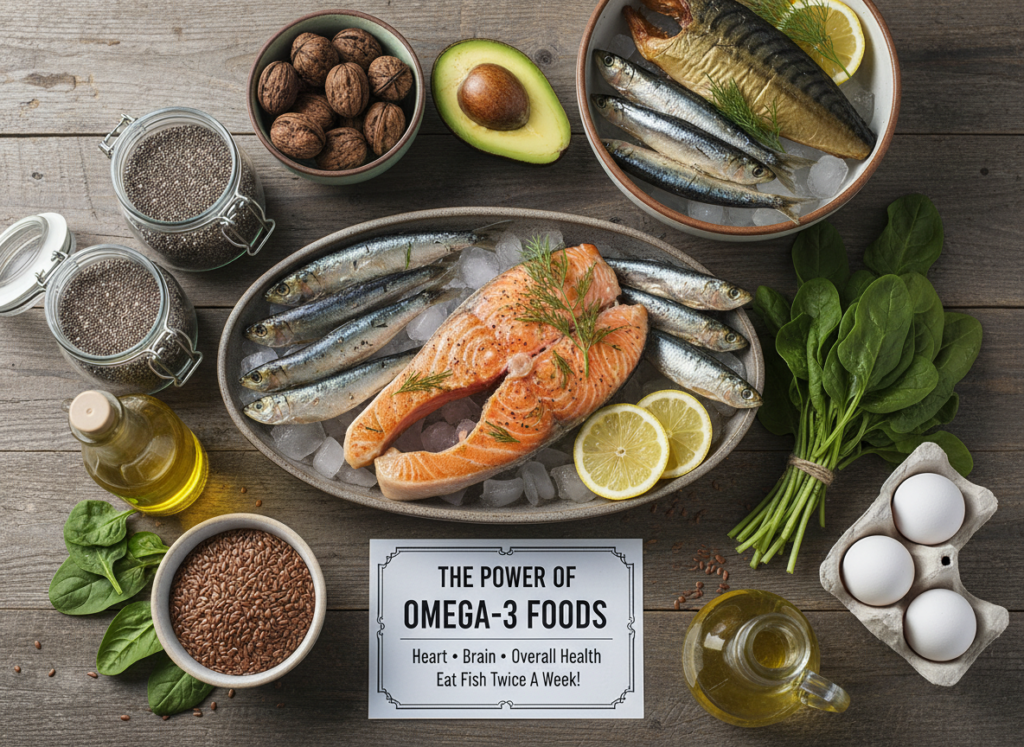
Omega-3 fatty acids are essential nutrients that play a vital role in maintaining overall health. Because the human body cannot produce enough Omega-3 on its own, these healthy fats must come from the foods we eat. Including Omega-3-rich foods in your daily diet can support heart health, brain function, and even emotional well-being.
There are three main types of Omega-3 fatty acids: ALA (alpha-linolenic acid), EPA (eicosapentaenoic acid), and DHA (docosahexaenoic acid). ALA is mainly found in plant sources such as flaxseeds, chia seeds, walnuts, and hemp seeds. EPA and DHA are commonly found in fatty fish like salmon, mackerel, sardines, and tuna. Both forms are important, but EPA and DHA are especially beneficial for heart and brain health.
One of the most well-known benefits of Omega-3 foods is their ability to support cardiovascular health. These healthy fats may help lower triglyceride levels, reduce inflammation, and support healthy blood pressure. Eating fatty fish at least twice a week is often recommended as part of a heart-healthy diet.
Omega-3 fatty acids are also crucial for brain function. DHA, in particular, is a major structural component of the brain. Adequate intake may help improve memory, concentration, and overall cognitive performance. Some research also suggests that Omega-3s can support mood balance and emotional health.
Adding Omega-3 foods to your meals can be simple. Sprinkle ground flaxseed over oatmeal, enjoy grilled salmon for dinner, or add walnuts to salads and snacks. Small changes in your eating habits can lead to long-term health benefits. By making Omega-3-rich foods a regular part of your diet, you empower your body with nutrients that promote strength, balance, and overall wellness.