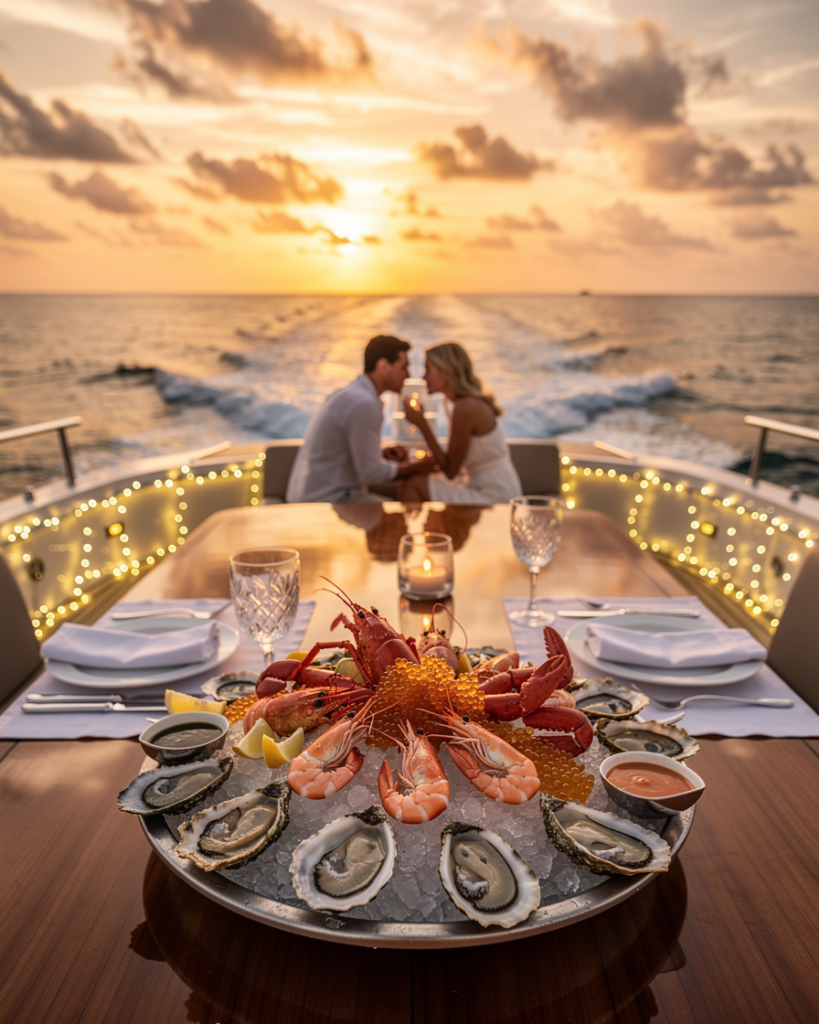
Oysters are the ultimate expression of merroir (the taste of the place they were grown).
- East Coast (Atlantic): Generally saltier, with a mineral finish and a “clean” snap. They tend to have smoother, teardrop-shaped shells.
- West Coast (Pacific): Known for being creamier and sweeter, often featuring notes of cucumber or melon. Their shells are typically jagged and fluted.
- The Serving Secret: Keep them on a bed of crushed ice. A simple Mignonette (shallots, cracked pepper, and red wine vinegar) enhances their natural salinity without masking it.
🦐 The Versatile Classic: Shrimp
Shrimp provides the essential “snap” and sweetness that bridges the gap between the raw oyster and the rich lobster.
- Preparation Styles: * Classic Poached: Simmered in a court-bouillon (lemon, bay leaf, peppercorns) and chilled for a traditional cocktail.
- Grilled: Charred quickly over high heat with garlic butter to bring out a smoky, caramelized sweetness.
- The Texture: Look for “U-12” or “U-15” (meaning 12–15 per pound) for a meaty, impressive presentation.
🦞 The Crowning Jewel: Lobster
Lobster is the centerpiece, celebrated for its succulent, buttery meat.
- Cold vs. Hot: * Cold: Perfect for a seafood tower, served with a bright dijonnaise or a squeeze of lemon.
- Hot: Poached in butter (the “Confit” method) at low temperatures to ensure the proteins remain tender and never rubbery.
- The Pairing: Lobster pairs exceptionally well with tarragon or chives, which highlight its natural sweetness.
The “Elegance” Comparison Table
| Feature | Oysters | Shrimp | Lobster |
| Primary Flavor | Briny, Mineral | Sweet, Mild | Rich, Savory |
| Best Texture | Silky/Firm | Snappy | Succulent/Buttery |
| Essential Pairing | Champagne | Horseradish | Drawn Butter |
| Effort Level | High (Shucking) | Low | Medium (Cracking) |