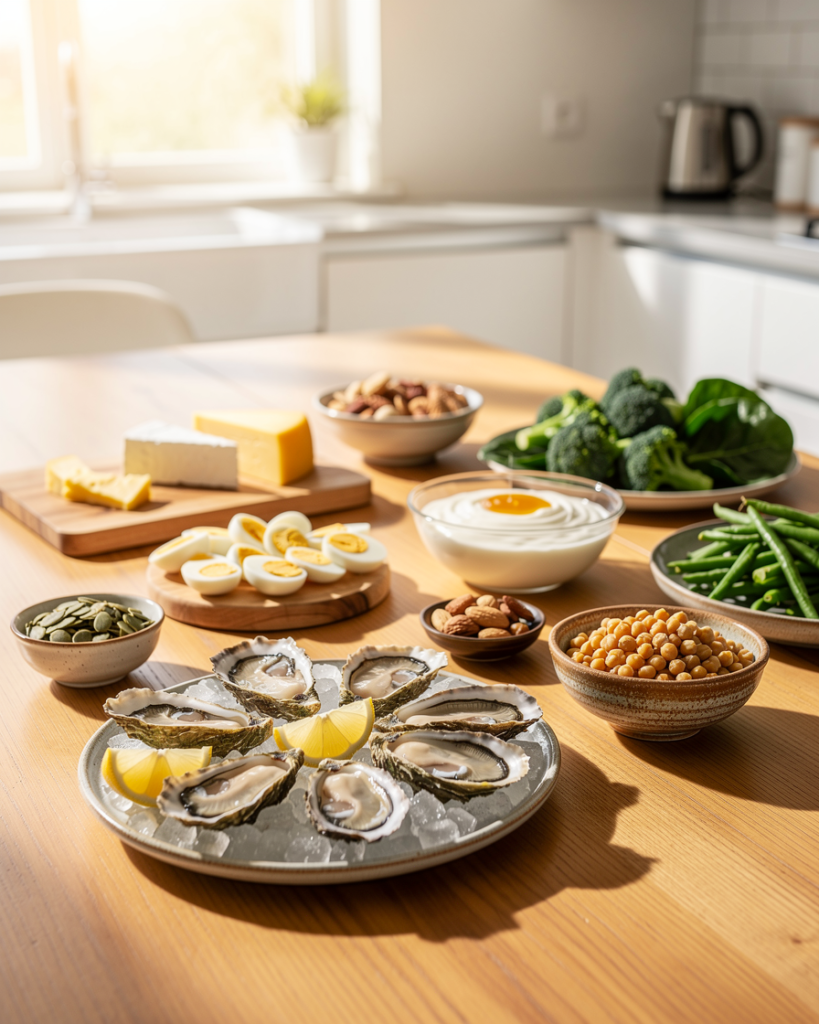
Zinc is an essential mineral that plays a crucial role in many body functions. It supports the immune system, helps wounds heal faster, contributes to normal growth and development, and is important for taste, smell, and metabolism. Since the body does not store large amounts of zinc, it is important to consume zinc-rich foods regularly.
Animal-based foods are among the best sources of zinc because the body absorbs zinc from these foods more easily. Red meat, especially beef and lamb, contains high amounts of zinc and provides protein and iron at the same time. Poultry, such as chicken and turkey, also offers moderate levels of zinc and is widely consumed. Seafood is another excellent source, with oysters being the richest food source of zinc. Other shellfish like crab, shrimp, and mussels also contain significant amounts of this mineral.
Dairy products such as milk, cheese, and yogurt provide smaller but useful amounts of zinc. Eggs are another easy-to-include food that contributes zinc along with other essential nutrients. These animal-based foods are especially important for people who need higher zinc intake, such as children, pregnant women, and older adults.
Plant-based foods can also provide zinc, making them important for vegetarians and vegans. Whole grains like brown rice, oats, wheat, and quinoa contain zinc, particularly in their unrefined form. Legumes, including lentils, chickpeas, beans, and peas, are good sources of zinc and also provide fiber and plant protein. Nuts and seeds, such as pumpkin seeds, sesame seeds, sunflower seeds, almonds, and cashews, are especially rich in zinc and can be eaten as snacks or added to meals.
Some vegetables, including mushrooms, spinach, and peas, contain smaller amounts of zinc and help increase overall intake when eaten regularly. Fortified foods, such as breakfast cereals, may also provide zinc and are useful for people with limited dietary options.
In conclusion, zinc can be obtained from a wide variety of foods, including meat, seafood, dairy products, whole grains, legumes, nuts, seeds, and vegetables. Eating a balanced and varied diet ensures adequate zinc intake, supporting immunity, growth, and overall health.