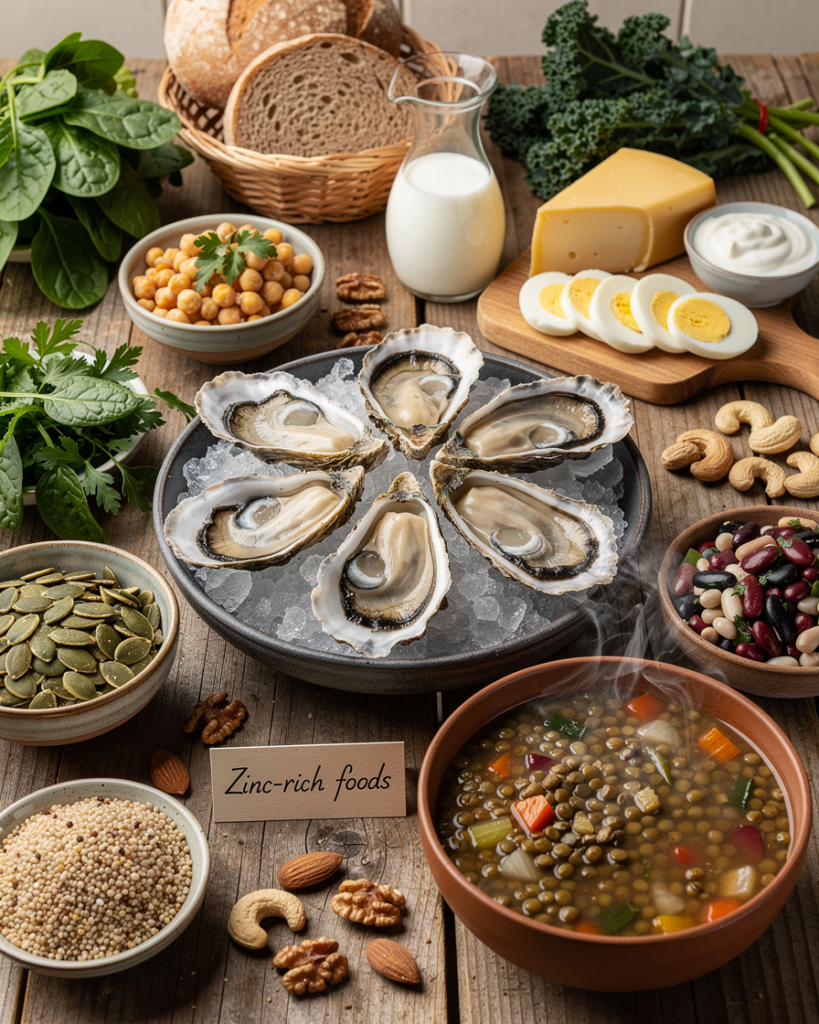
Zinc is an essential mineral required for many important functions in the human body. It plays a key role in strengthening the immune system, supporting wound healing, aiding normal growth and development, and maintaining healthy skin, vision, and taste. Because the body cannot store large amounts of zinc, consuming zinc-rich foods on a regular basis is necessary for good health.
Seafood is one of the richest natural sources of zinc. Oysters are the highest-zinc food available, providing several times the daily recommended intake in a single serving. Other shellfish such as crab, lobster, shrimp, and mussels also contain high levels. Fish including sardines, salmon, anchovies, and tuna provide moderate but valuable amounts of zinc.
Red meat is another major source of zinc, especially beef, lamb, and veal. Lean cuts are preferred, as they deliver high zinc content without excessive saturated fat. Organ meats such as liver also contain zinc, along with iron and vitamin B12.
Poultry and eggs contribute significant amounts of zinc. Chicken thighs, turkey, and duck contain more zinc than white meat. Eggs provide zinc mainly in the yolk and are an easy, affordable source for many people.
Dairy products such as cheese, milk, and yogurt offer moderate zinc levels. Hard cheeses like cheddar and Swiss contain higher concentrations compared to soft cheeses. Dairy also improves zinc absorption due to its protein content.
Seeds and nuts are excellent plant-based sources of zinc. Pumpkin seeds are especially rich, followed by sesame seeds, hemp seeds, sunflower seeds, cashews, almonds, and peanuts. These foods also provide healthy fats, protein, and antioxidants.
Whole grains and legumes supply good amounts of zinc, particularly when eaten in less-processed forms. Quinoa, oats, brown rice, whole wheat, lentils, chickpeas, black beans, and kidney beans are all valuable sources. Soaking, sprouting, or fermenting these foods can improve zinc absorption.
Fortified foods such as breakfast cereals and plant-based milk alternatives often contain added zinc and can help individuals meet daily requirements, especially those following vegetarian or vegan diets.
In conclusion, foods high in zinc include seafood, red meat, poultry, dairy products, seeds, nuts, whole grains, and legumes. Including a variety of these zinc-rich foods in daily meals helps support immune health, growth, and overall well-being.
Zinc is an essential mineral required for many important functions in the human body. It plays a key role in strengthening the immune system, supporting wound healing, aiding normal growth and development, and maintaining healthy skin, vision, and taste. Because the body cannot store large amounts of zinc, consuming zinc-rich foods on a regular basis is necessary for good health.
Seafood is one of the richest natural sources of zinc. Oysters are the highest-zinc food available, providing several times the daily recommended intake in a single serving. Other shellfish such as crab, lobster, shrimp, and mussels also contain high levels. Fish including sardines, salmon, anchovies, and tuna provide moderate but valuable amounts of zinc.
Red meat is another major source of zinc, especially beef, lamb, and veal. Lean cuts are preferred, as they deliver high zinc content without excessive saturated fat. Organ meats such as liver also contain zinc, along with iron and vitamin B12.
Poultry and eggs contribute significant amounts of zinc. Chicken thighs, turkey, and duck contain more zinc than white meat. Eggs provide zinc mainly in the yolk and are an easy, affordable source for many people.
Dairy products such as cheese, milk, and yogurt offer moderate zinc levels. Hard cheeses like cheddar and Swiss contain higher concentrations compared to soft cheeses. Dairy also improves zinc absorption due to its protein content.
Seeds and nuts are excellent plant-based sources of zinc. Pumpkin seeds are especially rich, followed by sesame seeds, hemp seeds, sunflower seeds, cashews, almonds, and peanuts. These foods also provide healthy fats, protein, and antioxidants.
Whole grains and legumes supply good amounts of zinc, particularly when eaten in less-processed forms. Quinoa, oats, brown rice, whole wheat, lentils, chickpeas, black beans, and kidney beans are all valuable sources. Soaking, sprouting, or fermenting these foods can improve zinc absorption.
Fortified foods such as breakfast cereals and plant-based milk alternatives often contain added zinc and can help individuals meet daily requirements, especially those following vegetarian or vegan diets.
In conclusion, foods high in zinc include seafood, red meat, poultry, dairy products, seeds, nuts, whole grains, and legumes. Including a variety of these zinc-rich foods in daily meals helps support immune health, growth, and overall well-being.